website templates

MADE IN INDIA

For DGCA Approved RPTOs, Military & Professional Pilots

Rotorcraft / Aeroplane

DronoSim

Base Edition

Built on real-world experience gained through active participation in the development and implementation of structured RPTO training workflow in India. This practical experience directly influences how DronoSim prioritizes training effectiveness over unnecessary complexity.

DronoSim is India’s first end-to-end indigenous drone training simulator, conceptualized, designed, and developed entirely in India. First released in 2016, DronoSim was created at a time when no structured drone training ecosystem existed in the country, with the clear objective of enabling serious, hands-on simulator based pilot training for RPAS operations. Built from the ground up by Indian developers, in India, for Indian training requirements, DronoSim has been re-engineered in 2026 to meet modern operational and training standards.

DronoSim is purpose-built for DGCA-approved RPTOs, defence and security training establishments and professional drone pilots who require realistic, logic-driven flight training rather than hobby-grade simulation or Computer Games. The simulator focuses on developing manual control proficiency, motor skills, and decision-making ability, enabling pilots to understand the fundamentals of RPAS flight and safely manage scenarios where automated systems may be unavailable or must be overridden. This becomes critical when operating high-value multirotor and fixed-wing platforms, where correct manual handling can prevent costly losses and operational failures.

Fixed-wing RPAS, in particular, demand a fundamentally different skill set compared to multirotor platforms, and simulator-based training is essential prior to live operations, even when onboard flight controllers are present. DronoSim addresses these realities through training-oriented flight logic, realistic physics, and assessment-focused tools, making it a trusted indigenous platform for structured drone pilot training in India and beyond.
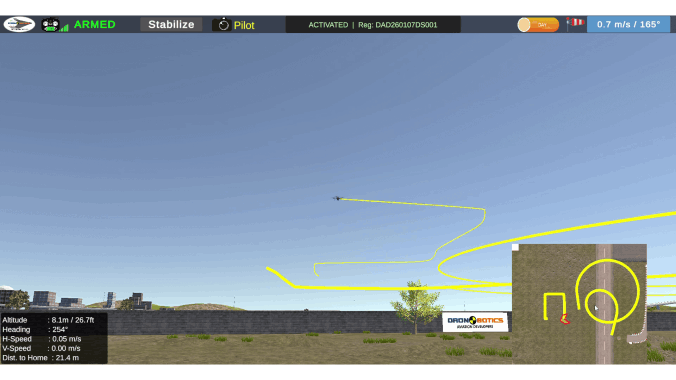
An RPTO-Friendly Simulator for Early-Stage Training & Regulatory Readiness

“Start with what you actually need. Scale when you’re ready.”

A drone simulator is a mandatory infrastructure requirement for applying as an RPTO under the applicable regulatory framework of DGCA.
Without a simulator, the RPTO application process typically cannot proceed.

The DronoSim Base Edition provides a simulator setup specifically designed to support the application and inspection stage of RPTO establishment, focusing on early-stage training readiness without unnecessary complexity or cost.

What this enables you to do
✔ Fulfil the mandatory simulator requirement before submitting your application.
✔ Proceed with the RPTO application with required training infrastructure in place.
✔ Demonstrate structured pilot training capability during scrutiny and inspection.
✔ Avoid delays caused by missing or incomplete simulator arrangements.

Why RPTOs choose the Base Edition
✔ Well suited for first-time RPTO applicants.
✔ Covers key approval-related requirements (no hidden cost or subscriptions).
✔ Affordable during the initial setup phase, when expenses are already high.
✔ No replacement needed later, upgrade seamlessly as operations expand.

Who this is for
✔ New RPTO applicants preparing regulatory submissions.
✔ Training organisations constrained by high simulator acquisition costs.
✔ Existing RPTOs seeking to move away from expensive foreign simulators.
✔ Organisations preferring a truly indigenous, India-developed solution.

Compliance clarity
Simulator availability is one of several requirements for RPTO approval.
Final approval depends on the applicant’s compliance with all applicable regulations and infrastructure requirements, and is subject to evaluation by the competent authority.

A Practical Note for RPTOs (Cost & Training Reality)
“We understand training better ...”

For RPTO training and DGCA-aligned exercises, quality of training matters far more than number of drones or the scenes in the simulator.
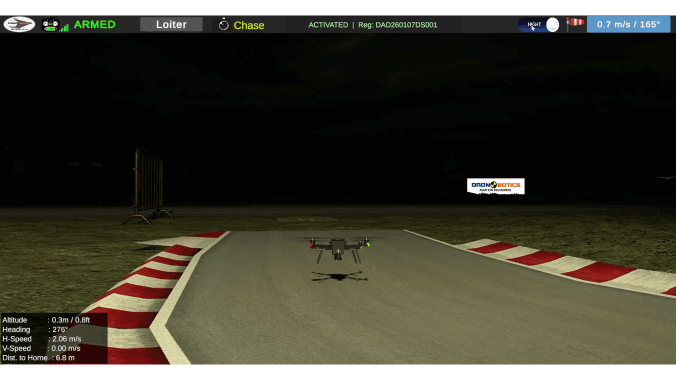
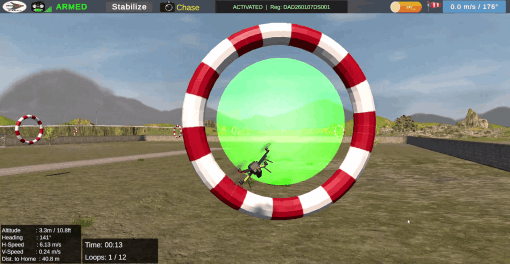
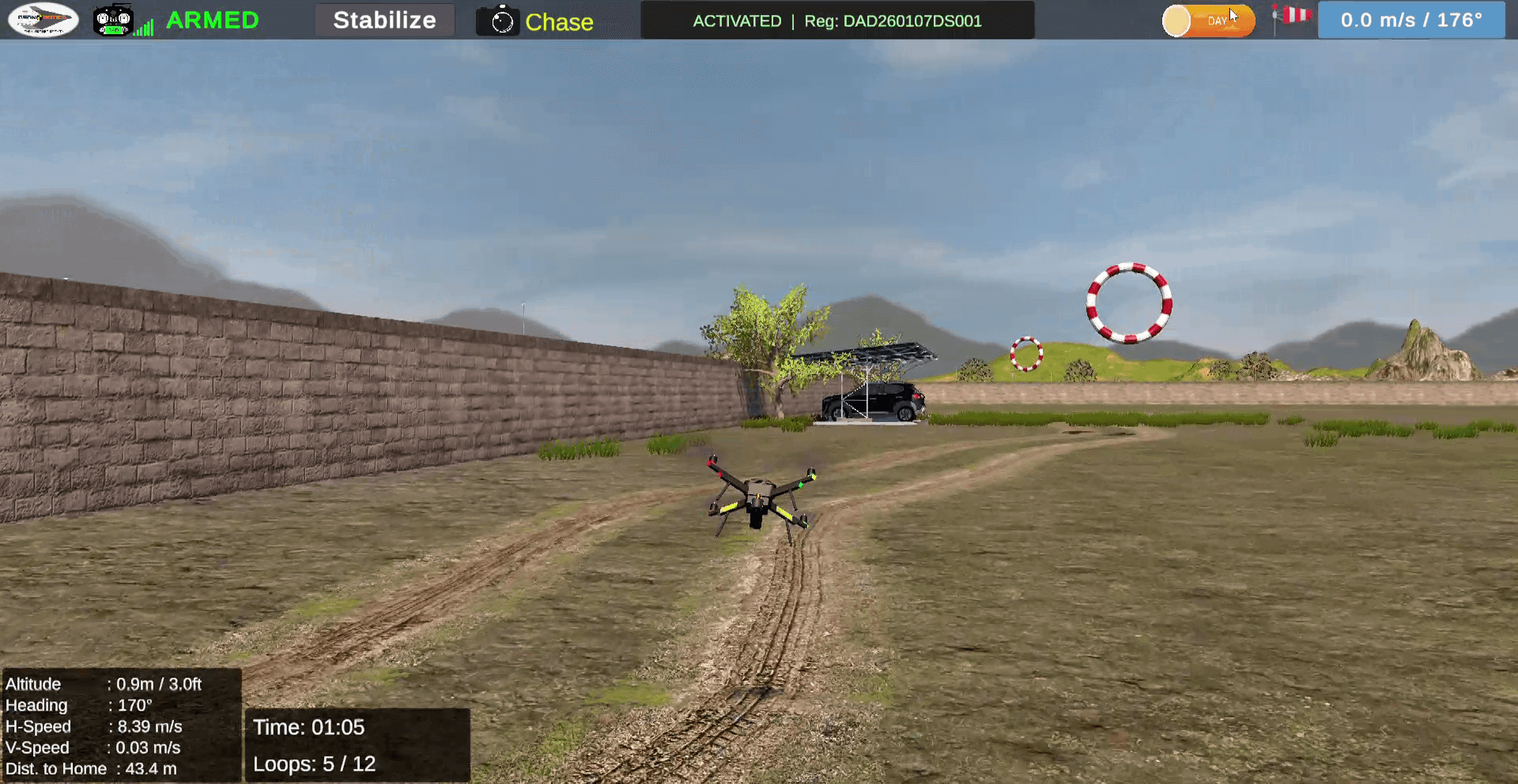
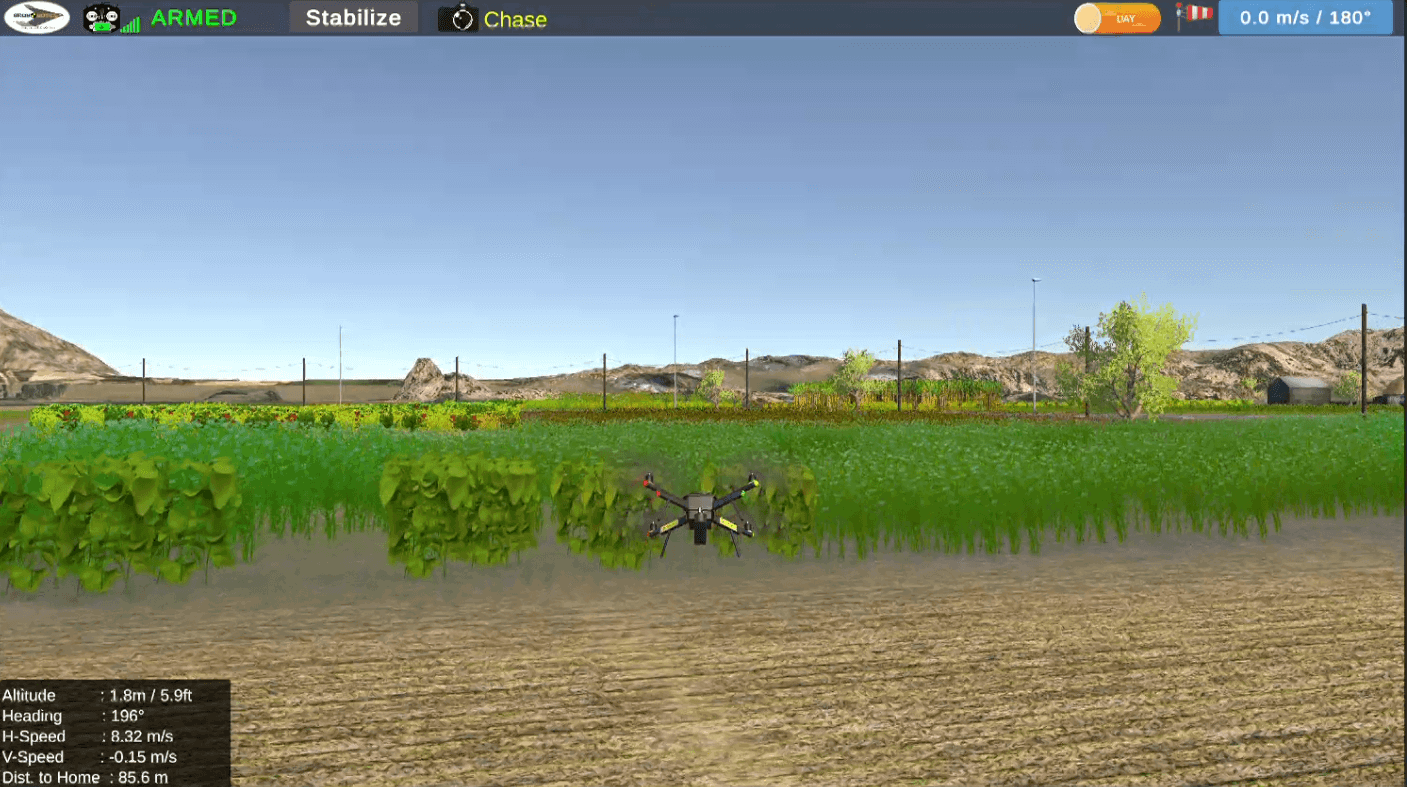
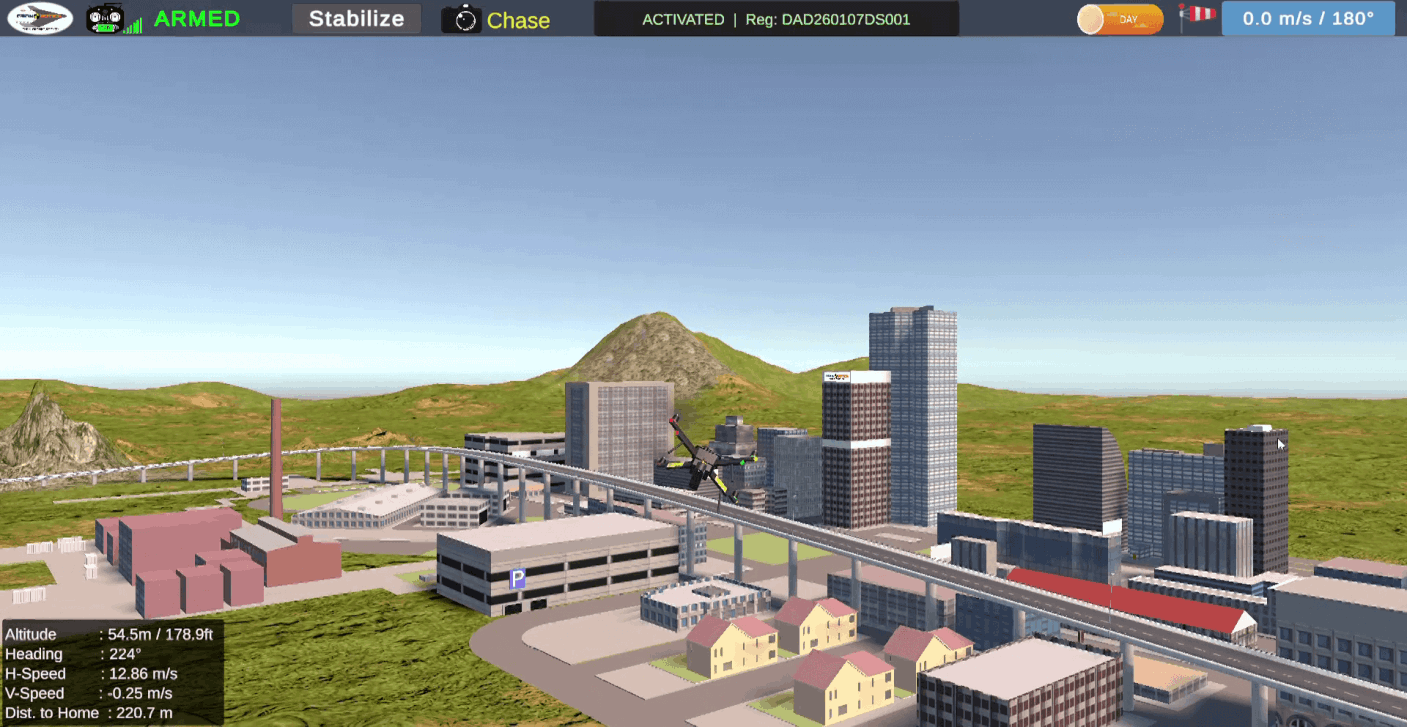
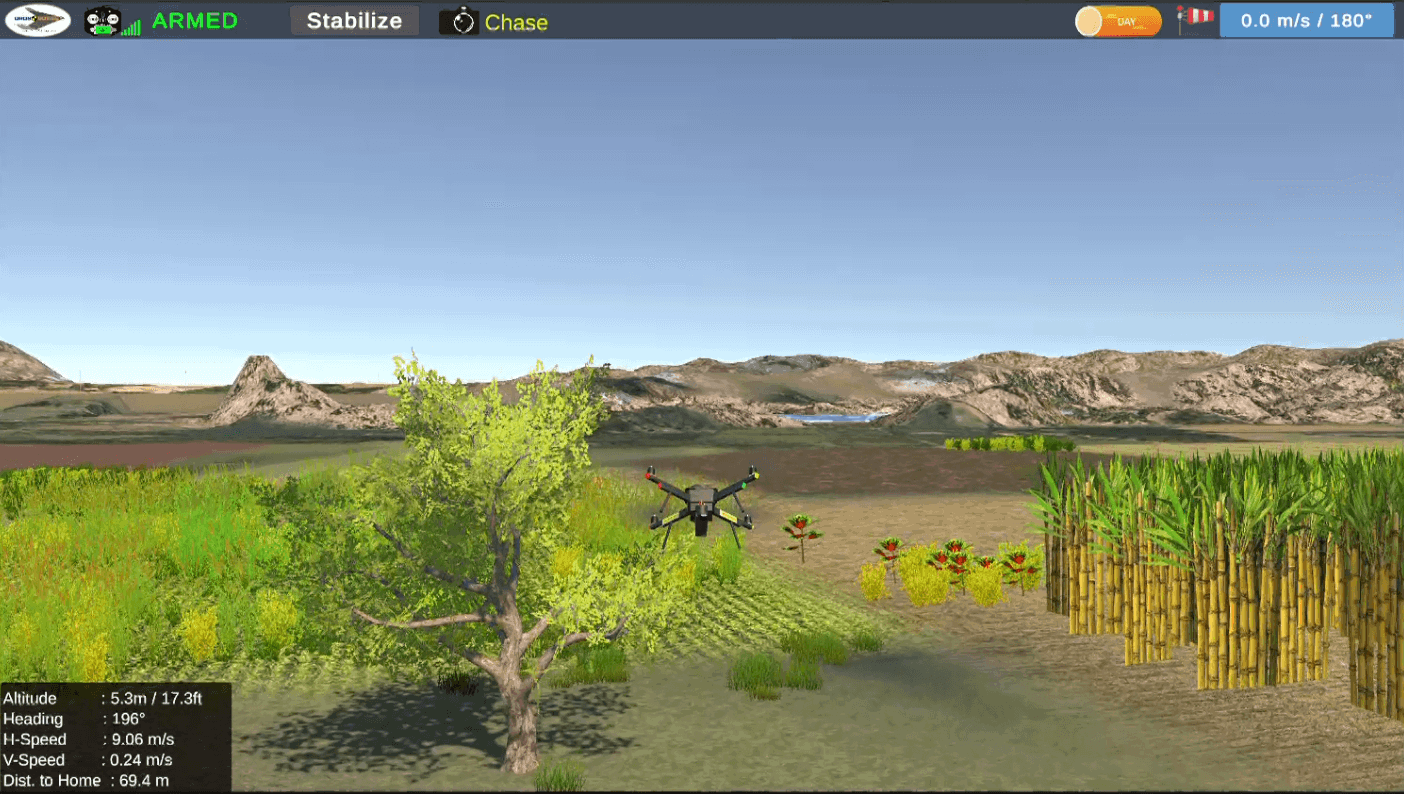
The DronoSim Base Edition is intentionally designed with 1 core training drone, 1 training environment and 1 structured challenge because this configuration is sufficient to conduct the 2.5 hours of structured simulator based Remote Pilot Certificate training, covering all essential manual control exercises such as take-off, hover, manoeuvres, orientation, pattern flying, night flying and landing assessment.
Adding dozens of unused drones or environments does not improve training outcomes at the approval or early operational stage rather it only increases cost and complexity.

Why this approach works
✔ RPTO training exercises are repetitive and skill focused, not content heavy.
✔ RPTO inspection focuses on training capability, not asset count.
✔ A single well-designed simulator setup allows repeatable, assessable exercises.
✔ Less complexity means easier instructor supervision and evaluation.

Designed for smart scaling
The Base Edition is not a limitation but it is a starting point.
Once training operations expand or revenue generation begins, RPTOs can seamlessly upgrade to advanced editions with additional drones, environments, challenge courses and training modules.

Ready to Apply? Start with DronoSim...
If you are preparing your RPTO application, DronoSim enables you to move forward NOW,  without waiting, overspending, or compromising on compliance.

HIGHLIGHTS

Flight & Control Simulation (Core Flying Logic)

  • Realistic PID-based flight physics
  • Training-oriented flight controller logic
  • Multiple flight modes including RTL
  • Arm / Disarm logic with safety handling
  • Wind simulation
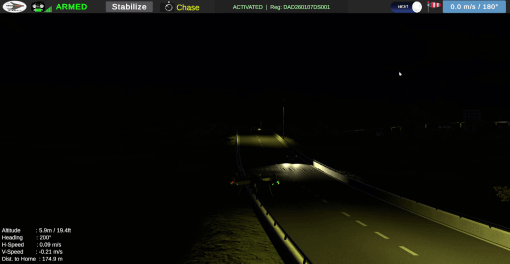
  • Day and night operation
  • Realistic RTL behaivior
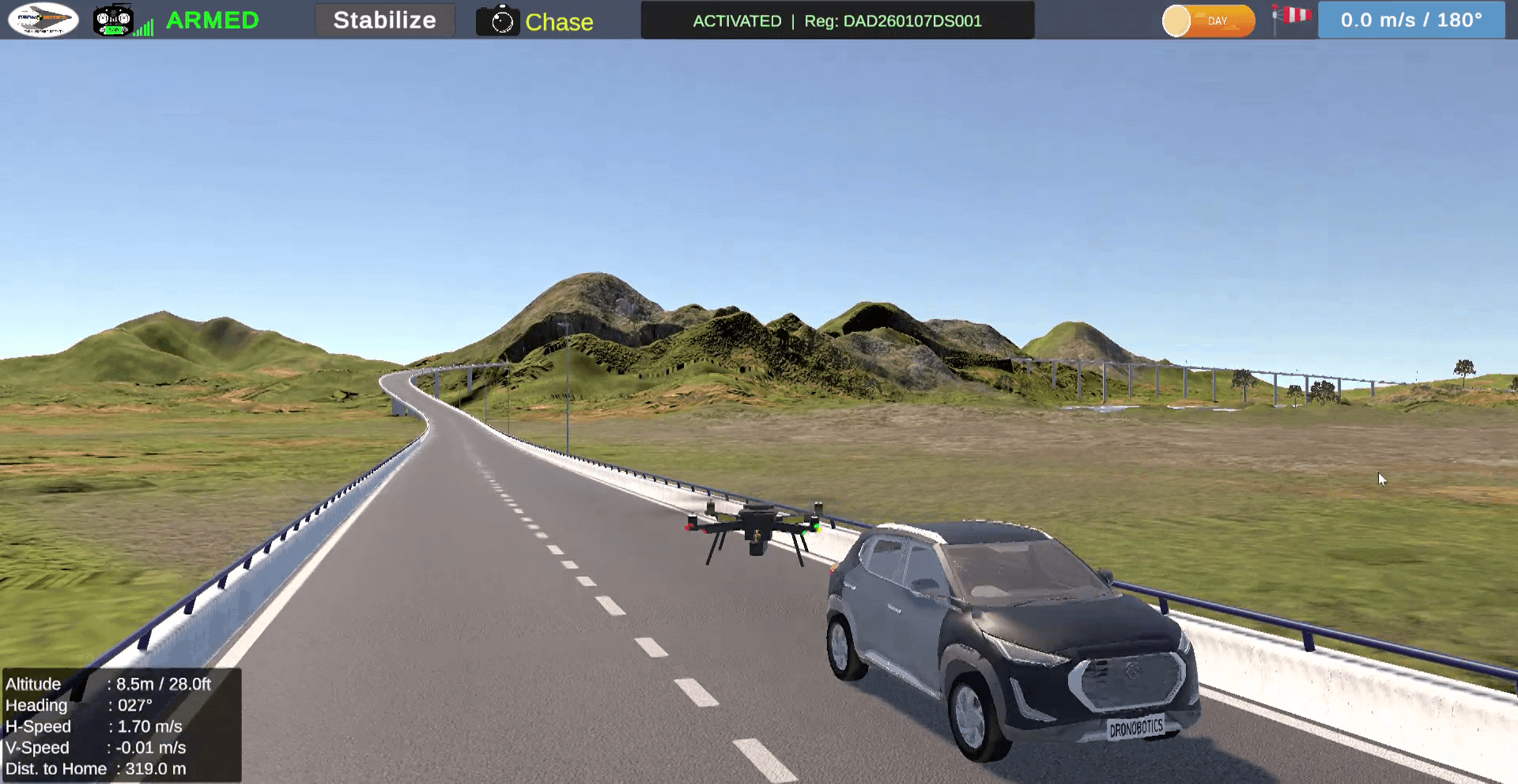
  • Telemetry Data Display

Training, Assessment & DGCA-Relevant Tools

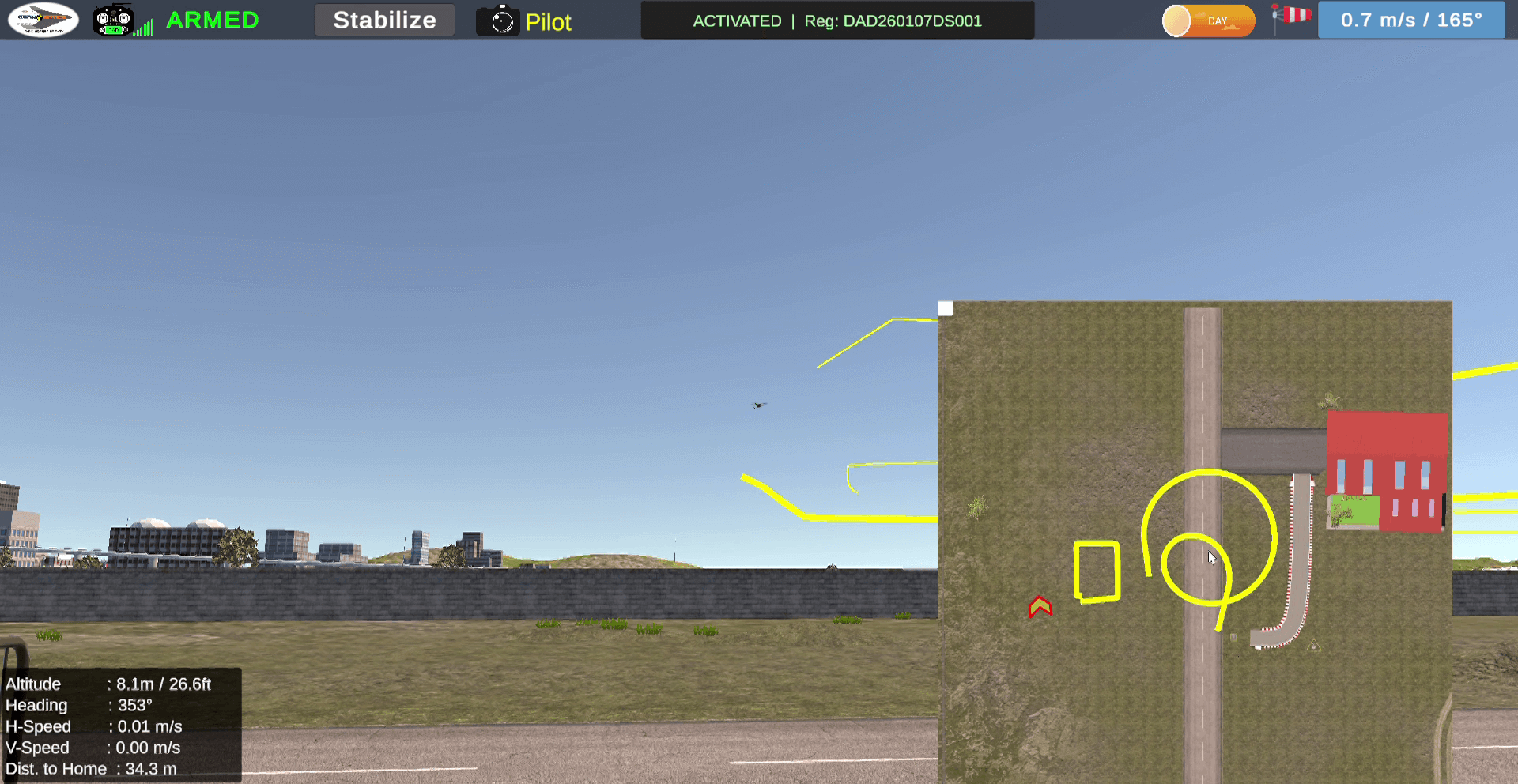
  • Flight path trail for training and assessment
  • Overhead view for analysing manoeuvres (circle, figure-of-eight, square, etc.)
  • Trail screenshot capture for assessment and documentation
  • Telemetry data display
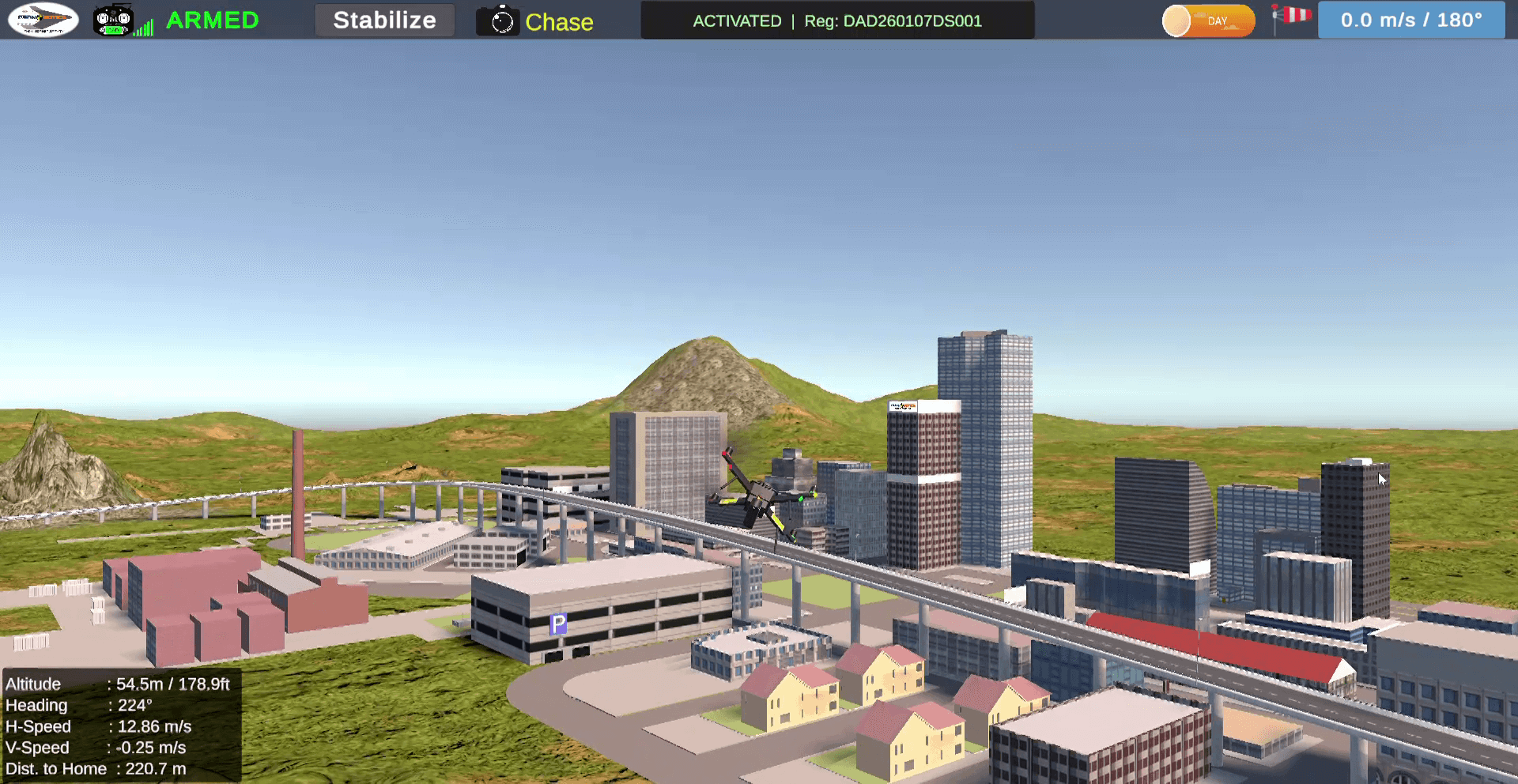
  • Registration number display for documentation purposes

Environment, Views & User Experience

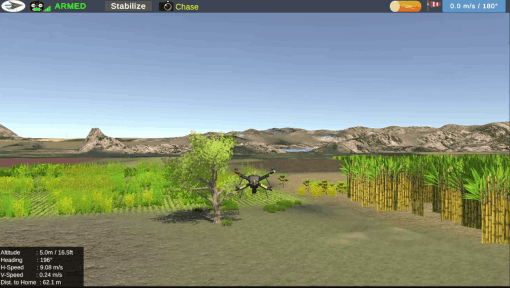
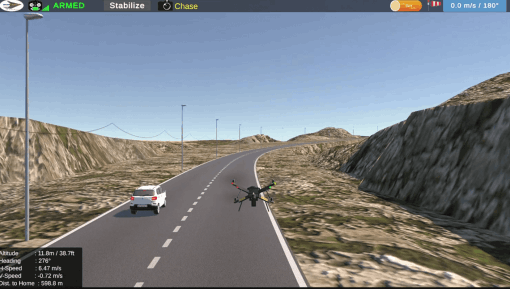
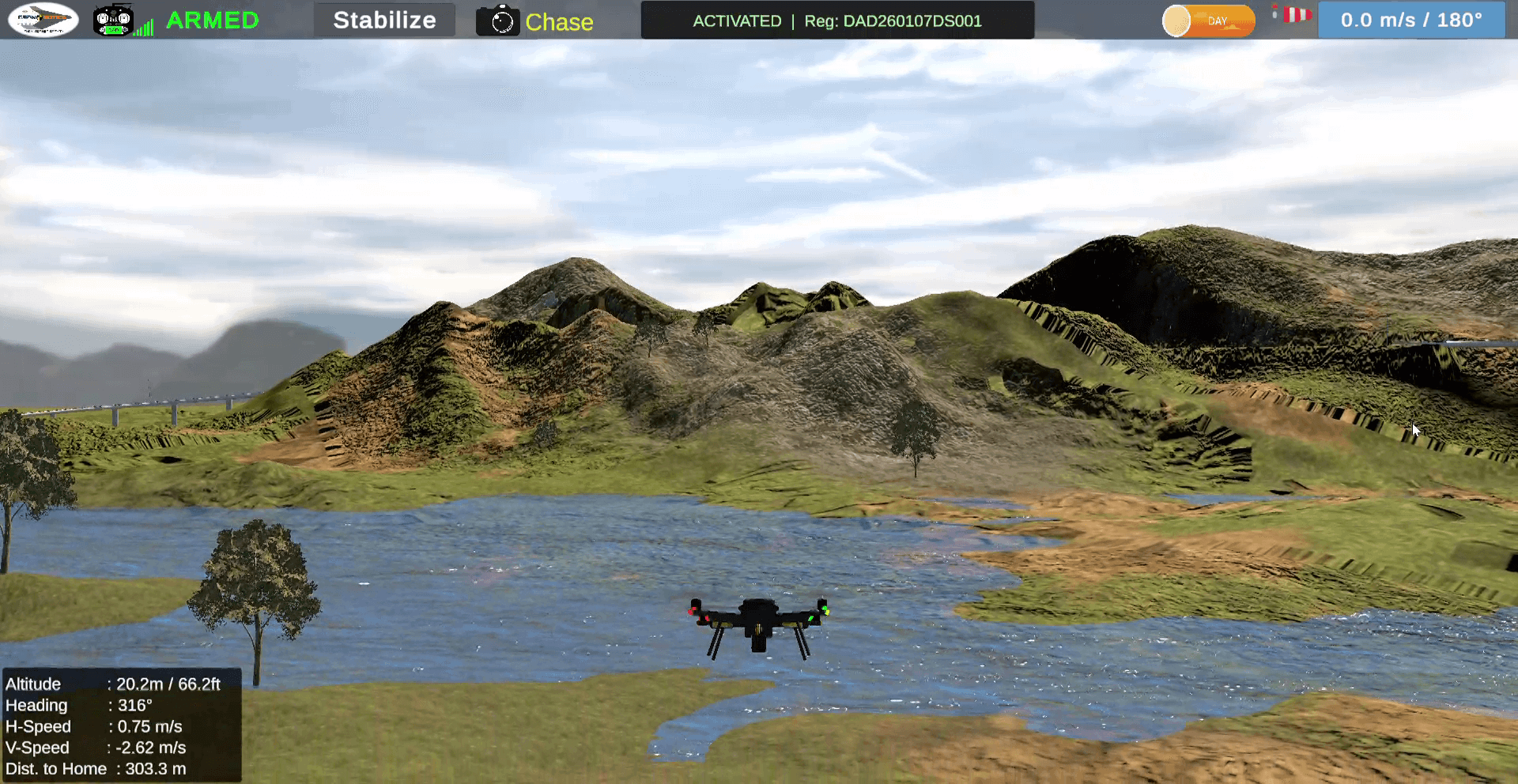
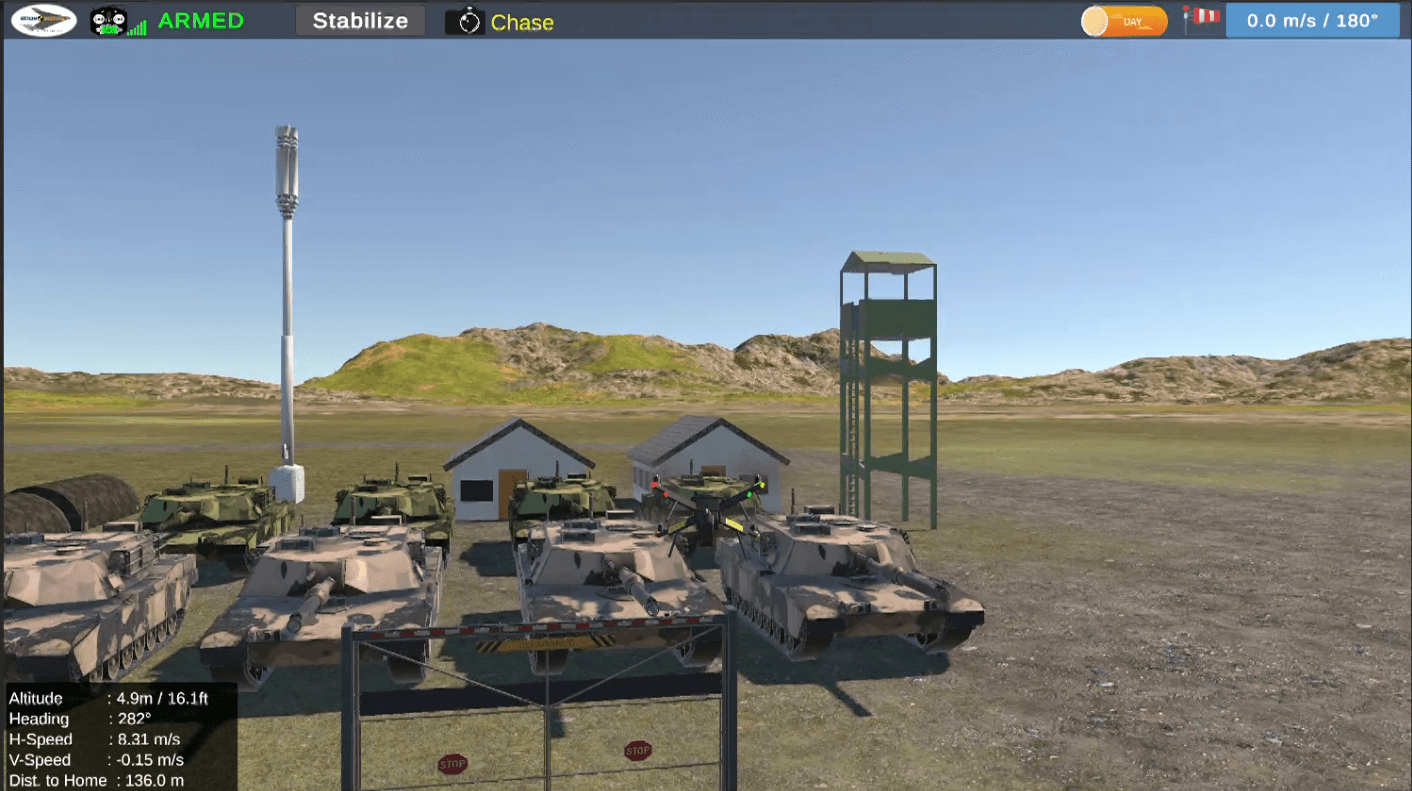
  • 3D training scenery
  • Multiple camera views including overhead analysis view
  • VR support (subject to compatible hardware and system performance)
  • Easy Installation Process
  • User friendly & Simple Interface
  • Keyboard Shortcuts + UI Buttons

Deployment, Hardware & Editions

  • USB controller calibration and mapping
  • Tested support for common RC controllers and joysticks (see supported list)
  • Offline operation (no internet dependency)
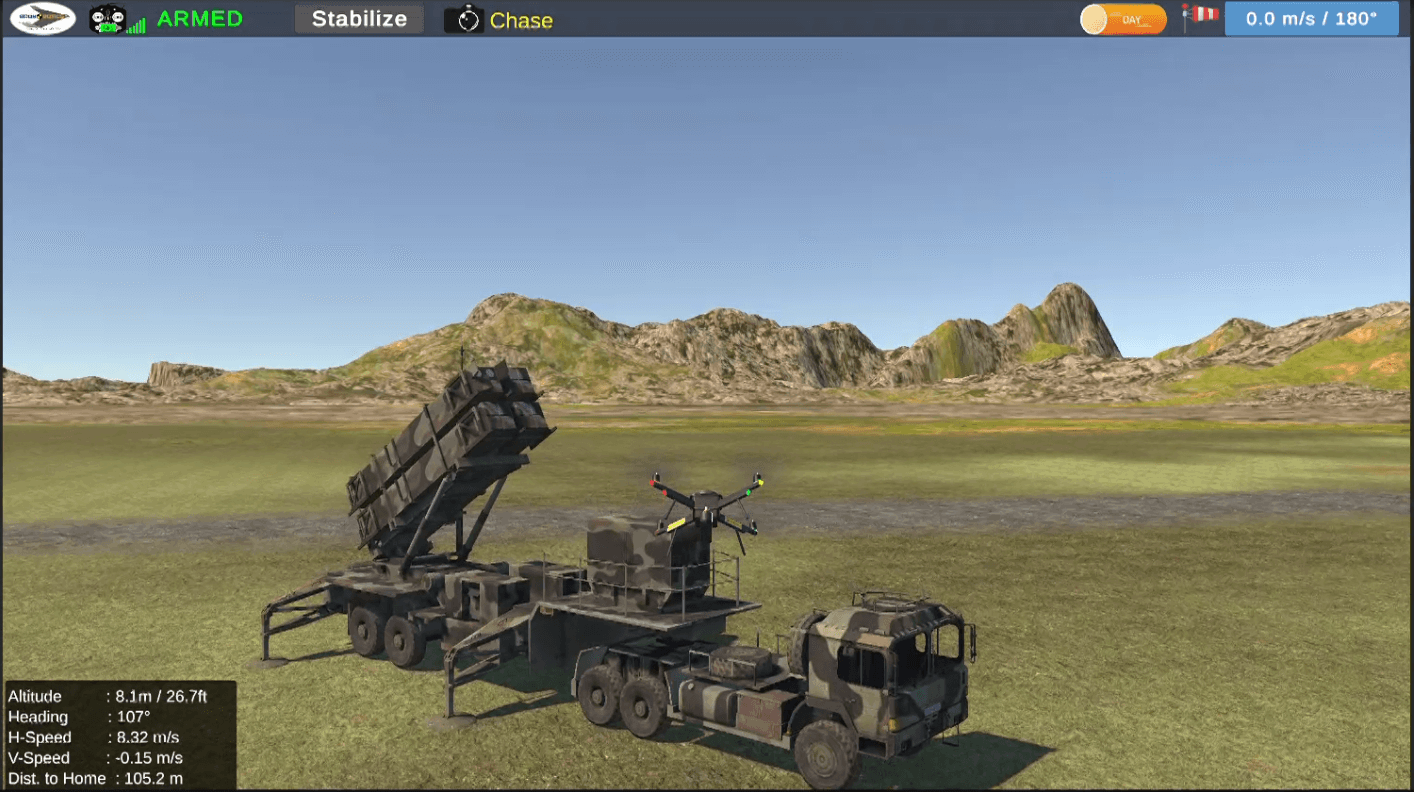
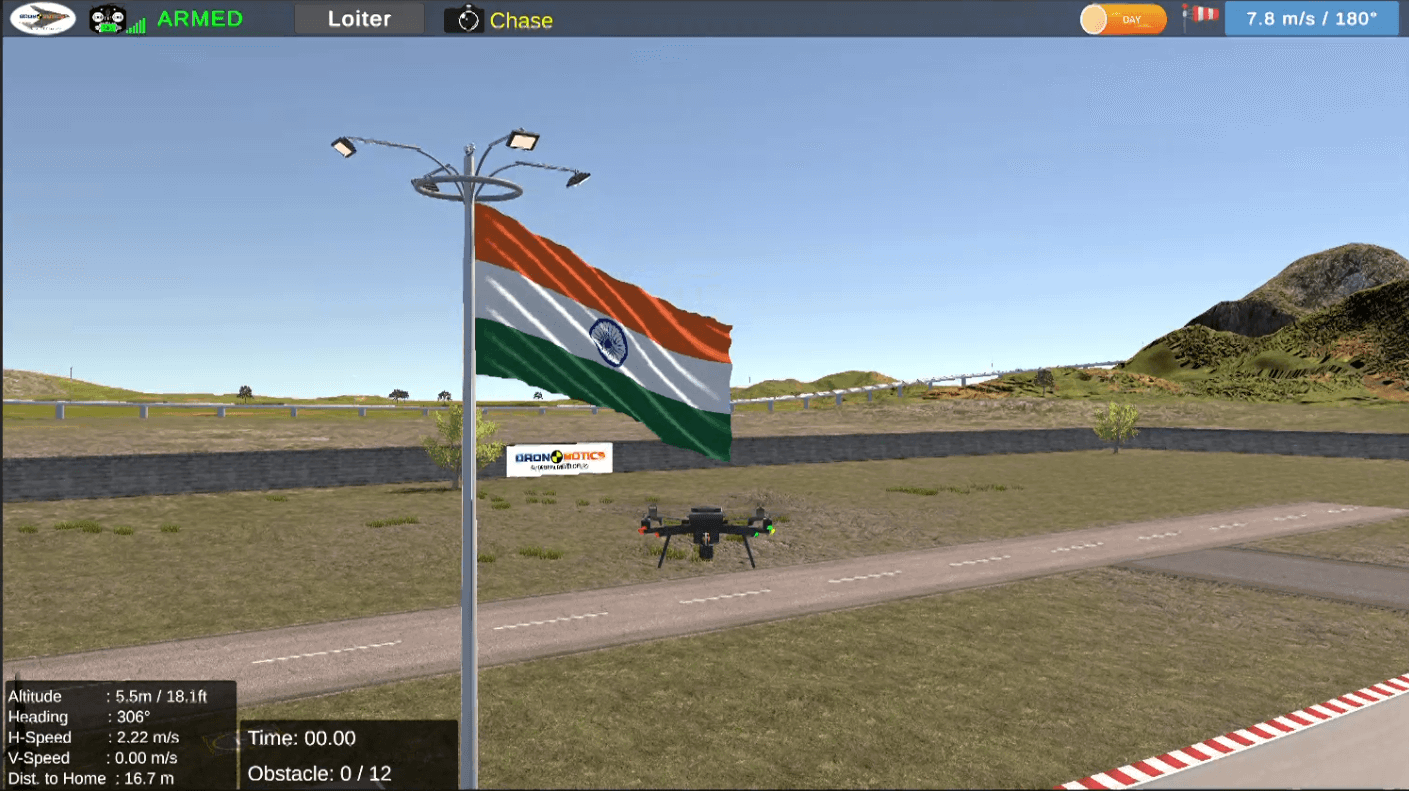
  • Base Edition includes: 1 drone, 1 training scenery, 1 structured challenge
  • Demo version available with operational geofencing (vertical and horizontal limits)

History

The initial development of DronoSim™ was conceptualized in 2016 with the objective of enabling hands-on simulator-based training to understand the fundamental flight controls and handling characteristics of Fixed Wing RPAS. The first operational version of DronoSim was released later in 2016 and was deployed exclusively for an Indian Air Force unit for training and familiarization purposes, marking its early adoption in professional and defence oriented training environments.

The first RPAS model simulated within DronoSim was LOCAV-3, an autonomous fixed-wing surveillance platform designed for perimeter surveillance operations. The simulator was developed to replicate realistic flight behaviour and control logic relevant to such operational use cases. With the formal establishment of DGCA-approved RPTOs in India, DronoSim was subsequently integrated into the RPTO training ecosystem to support hands-on simulator training focused on developing manual control proficiency and motor skills essential for real-world RPAS operations.

In the RPTO training version of DronoSim, the first multirotor model introduced was GURU-Trainer, a high-fidelity software replica of a real-world training drone designed and manufactured by Dronobotics, which was used in RPTOs during early days of formal remote pilot training. The GURU-Trainer simulator model was developed to closely mirror the flight behaviour, control response, and training characteristics of the actual aircraft used in RPTO environments.